





Double glazed windows and doors
Two panes with a sealed gap reduce the sound that travels straight through the glass compared with a single pane.
Compare window styles
Noise Reduction
Better windows can make a real difference to outside noise. High-performance window systems are designed to reduce the amount of external noise entering your home. The right combination of glazing, frames, seals and professional installation can significantly improve acoustic comfort.
Talk about your noise problem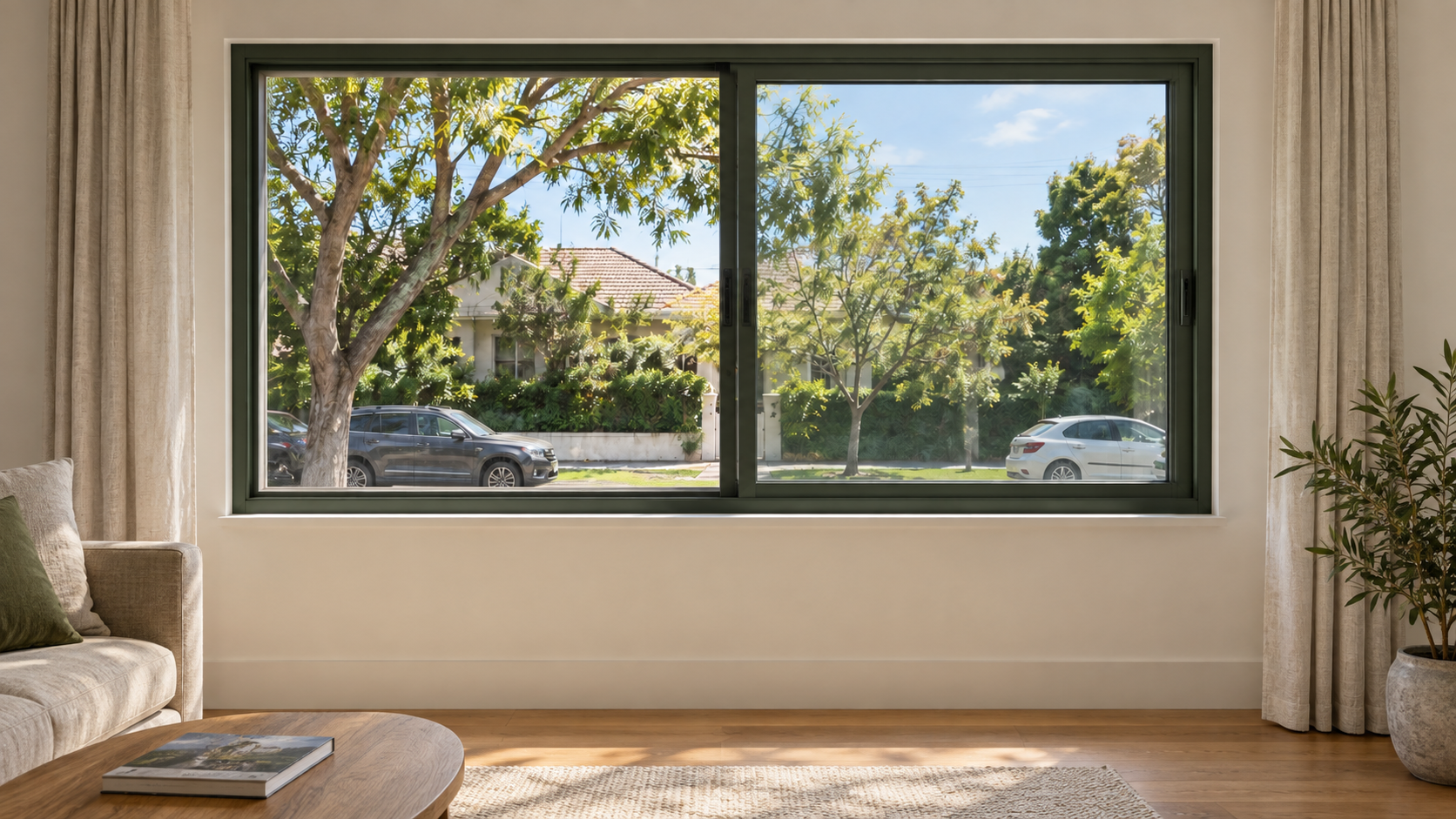
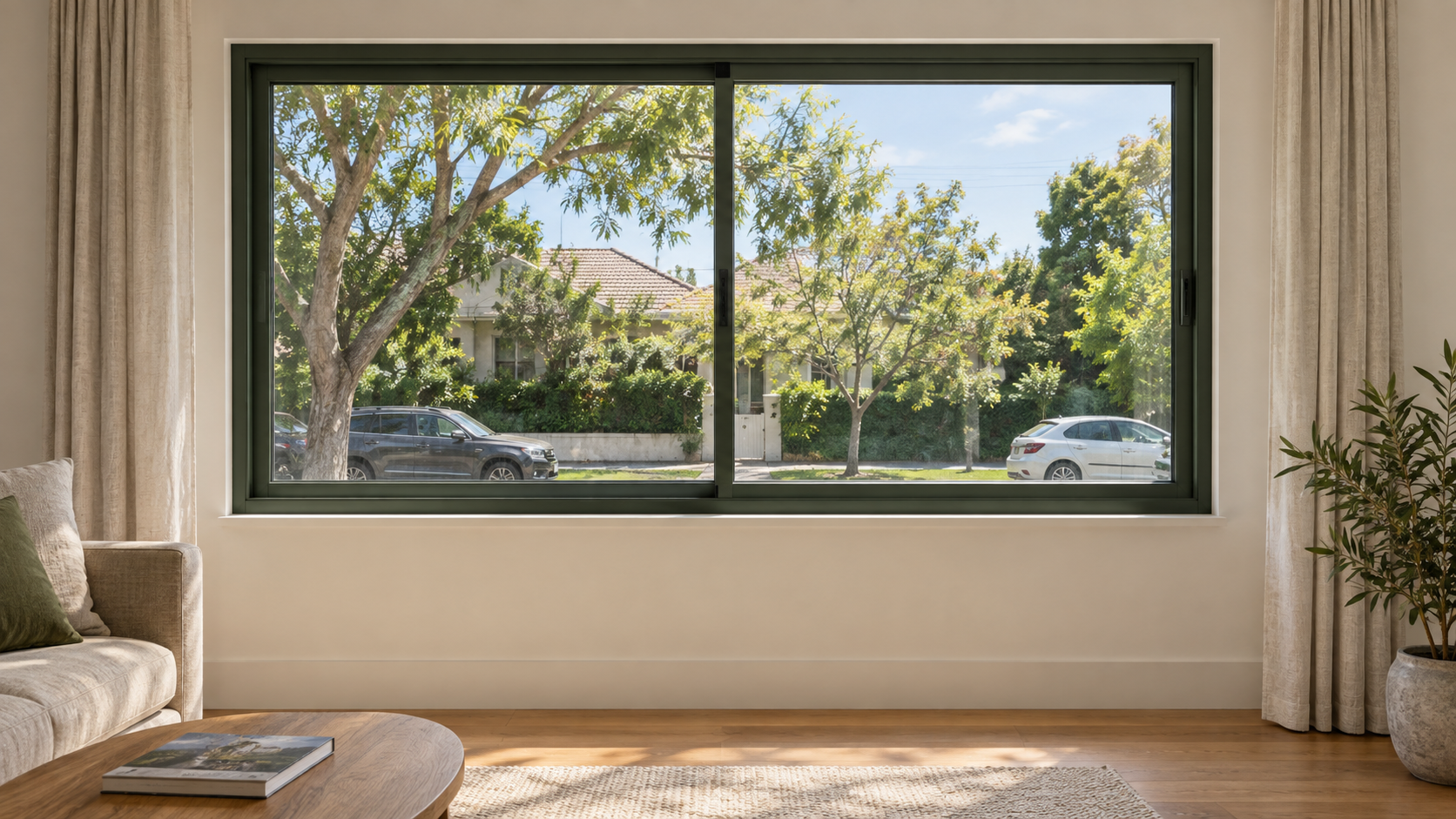
Concept visualisation. Compare the open and closed views above.
A quieter home
Different types of noise, glazing configurations, frame systems and installation conditions can influence the result. Earth Windows can help you understand the available options and choose a suitable solution.
The system
These factors interact; none can be quoted in isolation.
Pane count, thickness and the sealed gap change how the unit behaves acoustically.
The frame and its seals close the gap around the glass; worn seals undermine the assembly.
How the window is fixed and sealed into the opening matters as much as the unit itself.
Sound travels through walls, roofs, vents and gaps around the window. Windows alone rarely carry the full answer.
How Earth helps
Each option below is assessed for your openings on site; the right combination depends on the noise source and the building.
Two panes with a sealed gap reduce the sound that travels straight through the glass compared with a single pane.
Compare window stylesA laminated pane adds an interlayer that helps dampen sound and is often chosen for street-facing rooms.
See glass optionsTilt and turn, casement and awning windows press the sash against continuous seals when closed.
Tilt and turn windowsuPVC, timber and thermally broken aluminium frames, fitted and sealed into the opening, keep gaps from undoing the glass.
Compare framing materialsCompare the system
Choose the glazing around the noise you want to reduce.
Sound reduction index Rw (dB) - complete window
Single glazed
Numeric rating not shown; a comparable test report is required.Double glazed
Numeric rating not shown; a comparable test report is required.Triple glazed
Numeric rating not shown; a comparable test report is required.Double glazed with laminated glass
Numeric rating not shown; a comparable test report is required.No numeric comparison is shown without comparable whole-window test reports. These outlines do not represent measured values or a performance ranking.
One pane of glass. Pane thickness, opening type and seals shape the acoustic result.
Two panes with a sealed gap. Glass thicknesses and cavity size are part of the specification.
Three panes. More panes alone do not establish a better acoustic rating.
A laminated pane adds an interlayer. Its specification and the complete window test matter.
Ask Earth for the tested specification and acoustic rating of the complete window proposed for your home.
Frames and seals
Glass, frame, seals and installation work as one system.
There is no universal acoustic ranking by frame material. Compare documented complete systems under comparable test conditions.
Further reading: YourHome - Noise control · AGWA - Acoustics
Common questions
High-performance window systems are designed to reduce external noise. Glazing, frames, seals and professional installation work together to improve acoustic comfort; the right specification depends on the noise and your home.
Usually not alone. Sound also travels through walls, roofs, vents and gaps — the flanking paths. A realistic outcome treats the window as part of a wider system.
Not necessarily. Some situations allow an insert or retrofit; others need full replacement. The appropriate route is decided on site.
Ventilation and acoustic performance trade against each other because open windows admit sound. How you ventilate is part of the assessment conversation.
Next step
Describe the source, the rooms and what you would like to change. We will talk through variables and realistic outcomes before any commitment.